
Morland to Newby Circular
Walk date – 6th July 2026
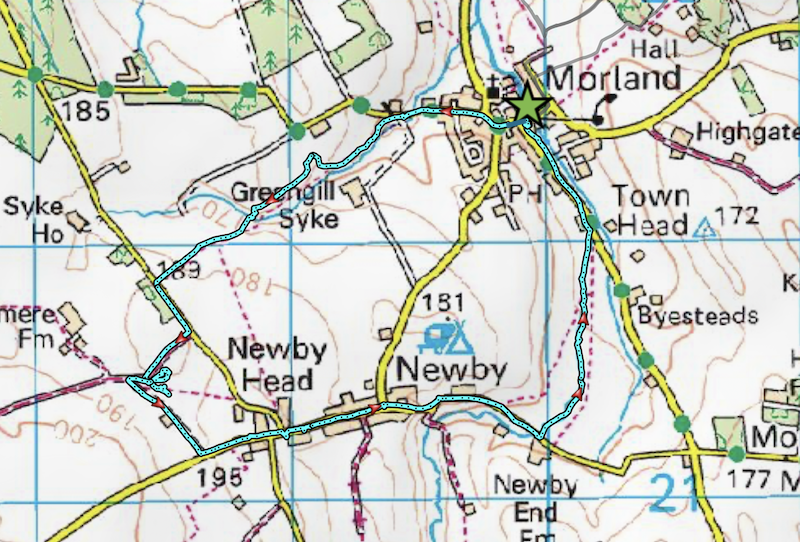
Distance – 4.25 miles
Weather – overcast to begin with, warm with a light breeze
A ‘phone call on Sunday revealed that the Midlands, plus all the areas to the south of it, had been basking in sunshine and high temperatures for over a week. Here in Cumbria, or at least in our particular part of it, we have had no such weather and we haven’t been out for a walk since our last venture on 24th June. No sunshine, no sweltering heat, just overcast skies, rain and very strong winds. A neighbour’s tree branches have been practically horizontal for days now because the wind has been so strong, and we’re down in the valley so the conditions on the high fells were likely to have been even worse. Things seemed to be showing no sign of improvement this morning but gradually the strong winds eased and by late morning were doing nothing more than occasionally ruffling a few leaves on our neighbour’s tree. By some miracle the temperature had also risen and so we decided to do an afternoon walk around the local area. It wasn’t sunshine and blue skies by any means but at least it was warmer and the wind had dropped considerably. Unsurprisingly, the minute we were back in Morland the sunshine and blue skies appeared. It hasn’t lasted though and today, Tuesday, we are back to grey skies and strong winds.
Route
Morland – Strickland Road – Greengill Syke field path – Lansmere Farm road – Quaker burial ground – Newby Head – Newby – Newby End – Town Head – Morland
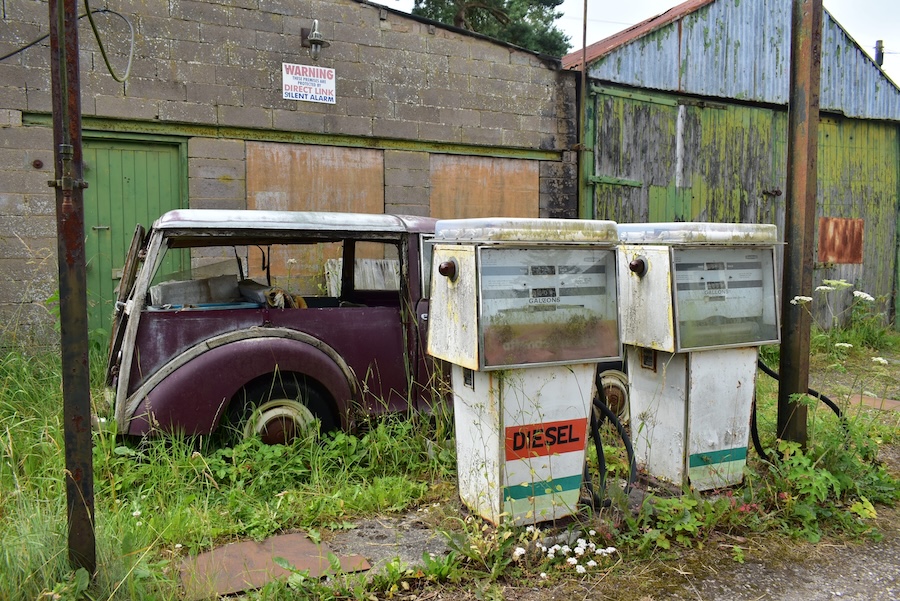
We parked in The Square by the Mill Yard Cafe, which is closed Mon & Tues so no parking problems today, and walked up the hill towards the old garage with its defunct fuel pumps plus a decaying old Morris Traveller. Every time we drive through Morland we see it and, in a quirky sort of way, have become rather attached to it so I thought I’d better have a photo of it before it all rusts away. There is a third large building, out of shot, to the left of the fuel pumps and the sign above it bears the name Halmshaw Garage. There is also a For Sale sign attached to a smaller building but quite what is for sale remains a mystery. Is it the whole site or just parts of it?

Another thing we always have to drive past is the ford across Greengill Syke, just down the hill from the old garage, which contained no water today, either flowing across the ford or in the bed of the beck. (Syke or Sike is just another name for a beck.)
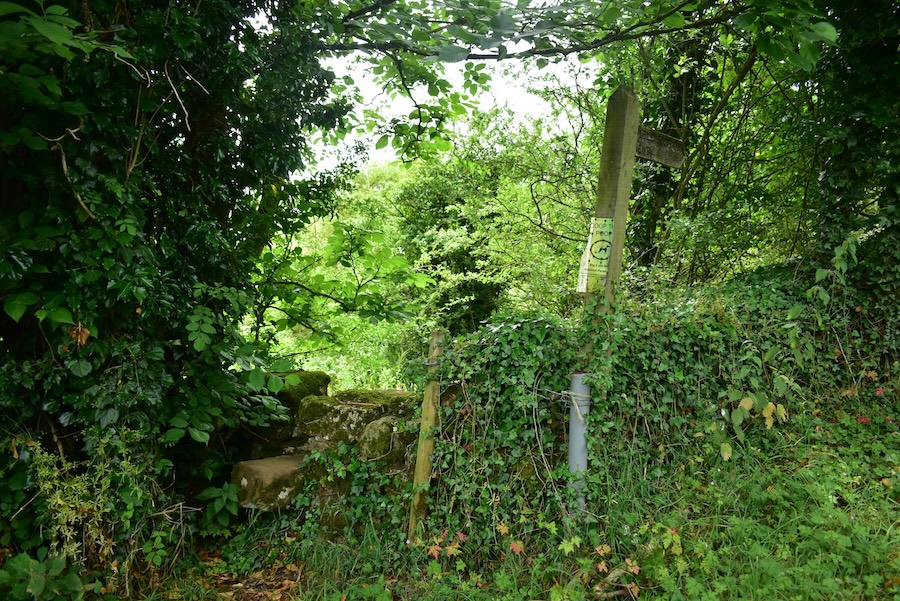
However, something which we have never noticed although its only a couple of steps from the ford, is this signpost with a stone stile beside it. I suppose we’ve not noticed it before because both are tucked away in the trees and the undergrowth and you wouldn’t know it was there unless you lived in Morland or were specifically looking for it, as we were. Once over this stile there is a faint path to follow. The initial stages of the walk are a field walk with several wooden stiles crossing the fences/hedgerows between them.
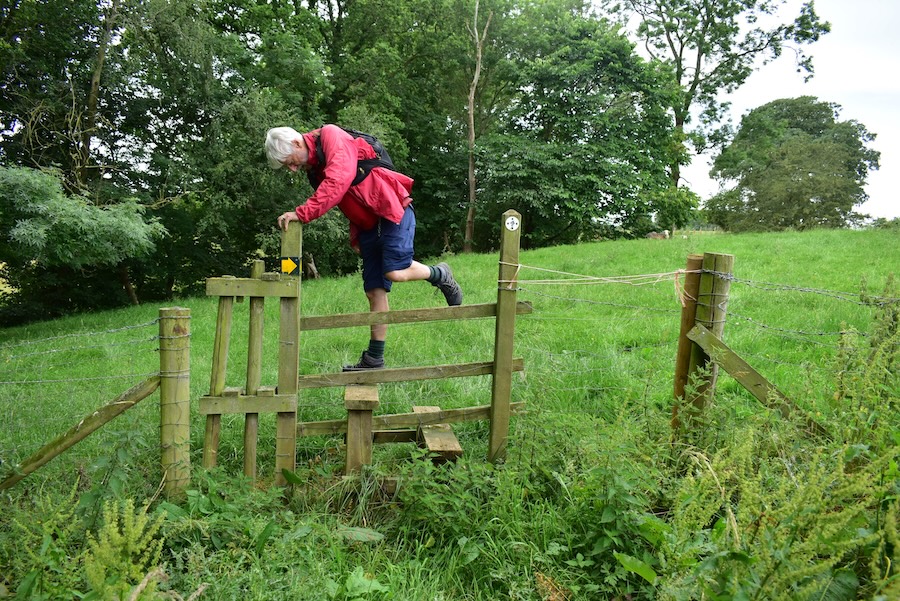
J climbing over the first wooden stile we came to. The walk from the stone stile up to this point was through woodland. A woodland walk is usually pleasant although a little on the shady side obviously but this woodland walk was over rough, uneven ground covered by vegetation which seemed to largely consist of nettles, thistles, docks and dandelions. Naturally enough J had chosen to wear shorts and I was wearing cropped trousers so we were both trying to avoid being stung, scratched or bitten both by the vegetation or the numerous flying beasties which were in residence. We were relieved to leave it all behind and take to the grassy field just over the stile.
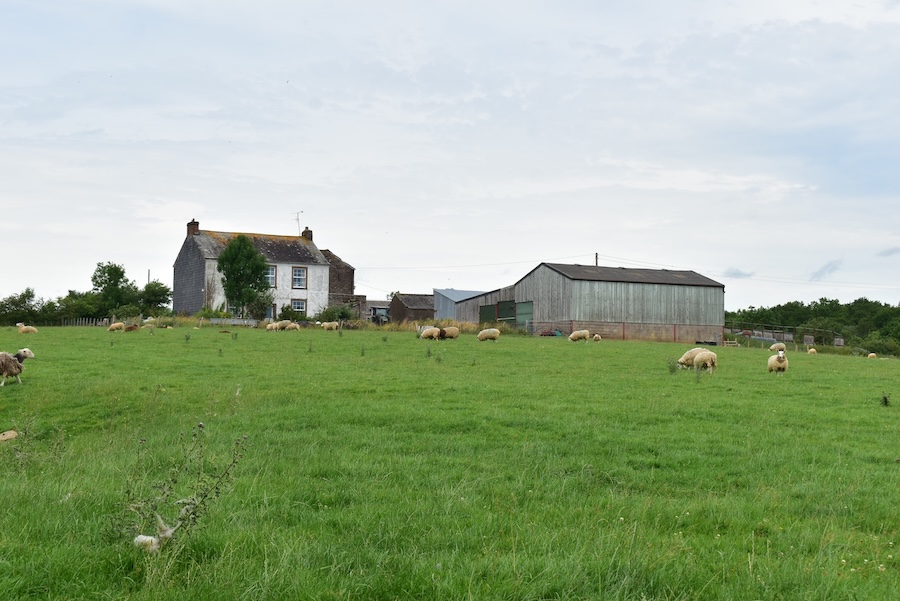
A glance over to Greengill Sike farm as we crossed the field …..
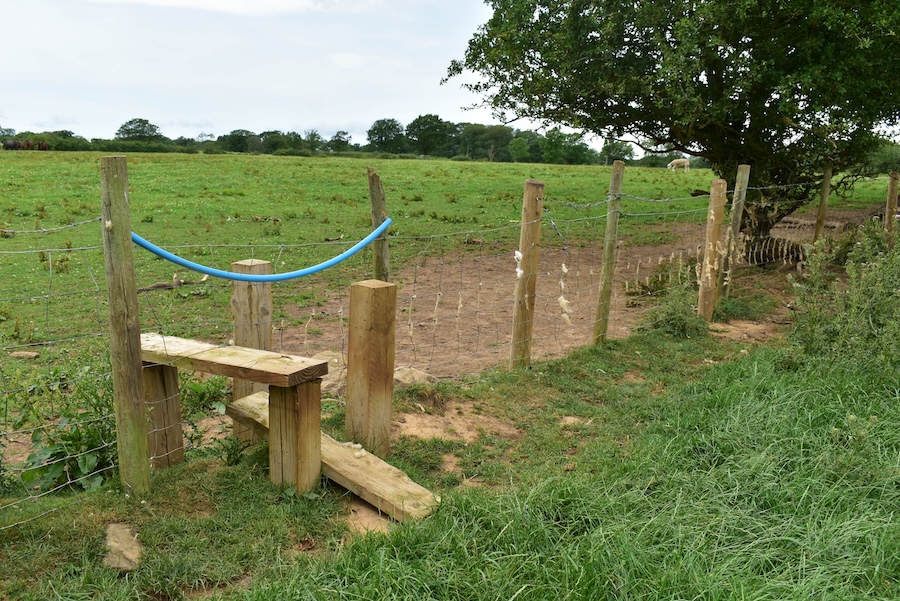
….. and reached the next partially collapsed wooden stile. On the other side of the fence was the familiar ‘arrow’ sign which pointed the way to …..
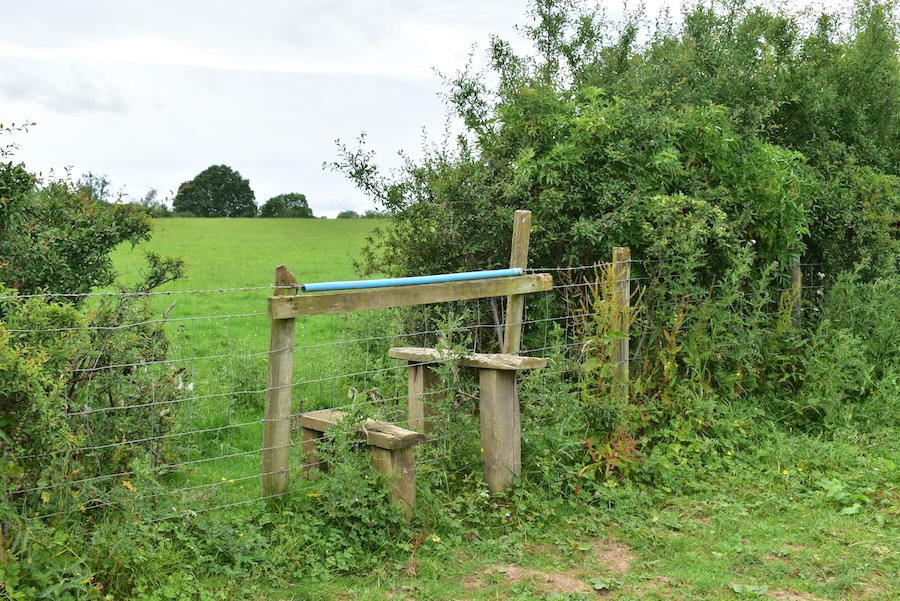
….. yet another stile, in better condition than the previous one, and with a length of blue tubing through which the barbed wire had been threaded. Once across we headed up the hill before …..
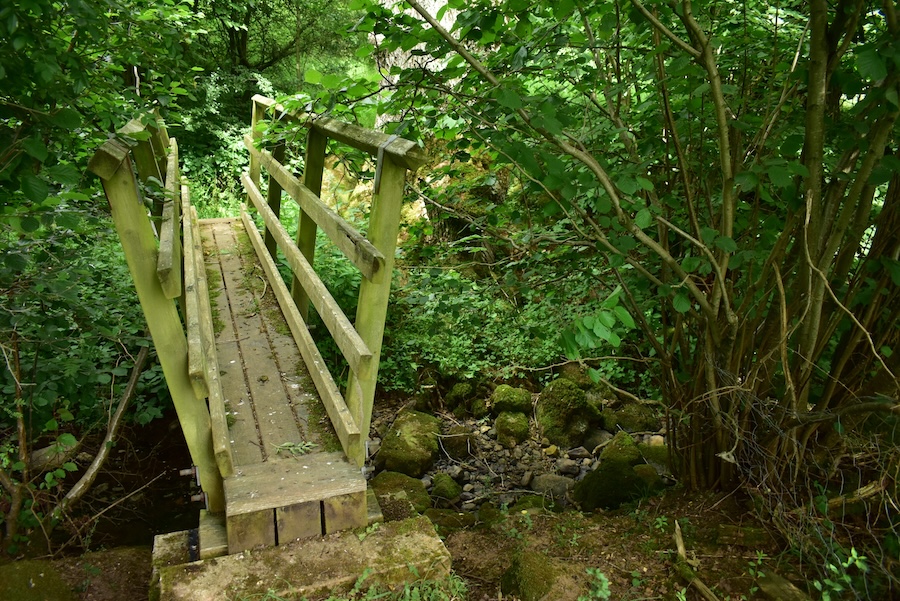
….. eventually steeply dropping down it again to this wooden bridge across a bone dry Greengill Syke. Once across the bridge and up the opposite banking waiting for us was …..
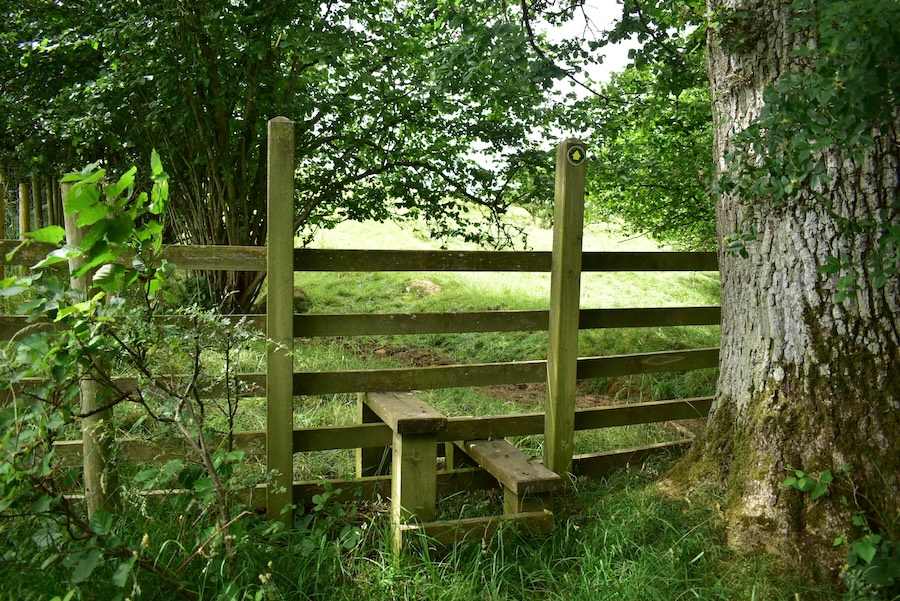
….. yes, you’ve guessed it, another wooden stile. That was the last of the stiles, for the time being anyway, and following that we had a pleasant walk across a field full of young heifers. They all stared at us keenly and as we passed through them they began to follow us, probably mistaking us for the farmer. Nothing to be worried about though they just ambled along behind us until …..

….. we came to a gate which we opened just wide enough to let each of us through and then closed it carefully, leaving the heifers wondering why they weren’t being allowed through as well.
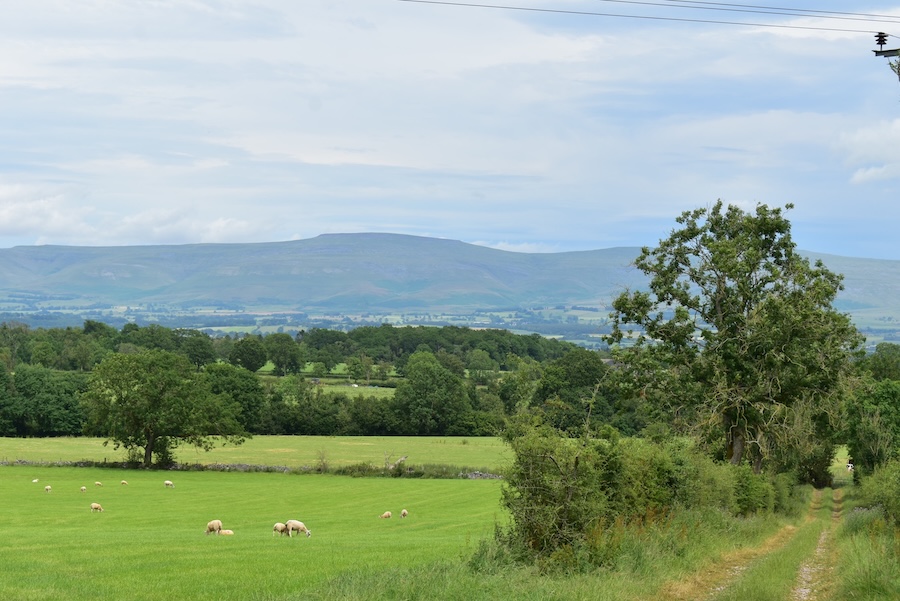
From the gate we walked up the green lane where sheep just wandered from field to field using the gaps in the hedgerows. I took a look back along the lane which we had just walked and noticed Cross Fell on the skyline on the eastern side of the Eden Valley.
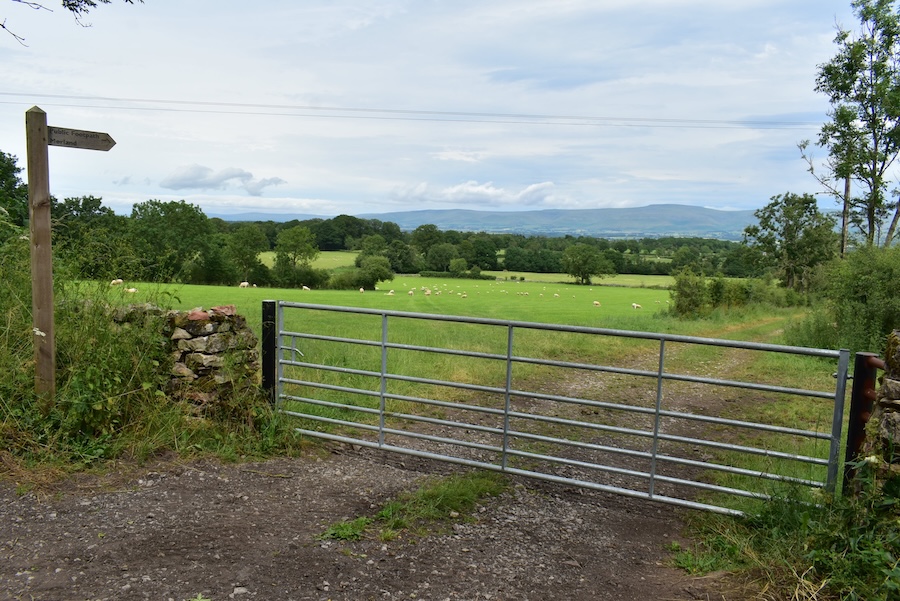
The view back from the gate as we reached the road leading to Newby.
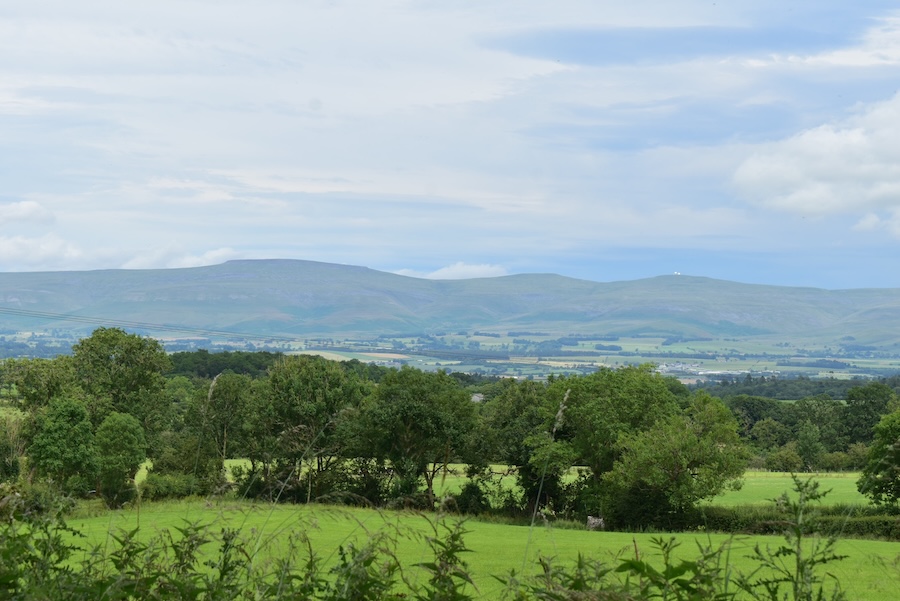
A section of road walking followed from where I took this shot across the Eden Valley to the North Pennines. A closer look will reveal the white radomes on Great Dun Fell over towards the right of the shot. By the way, that’s not blue sky above us its just the darker area at the bottom of the cloud.
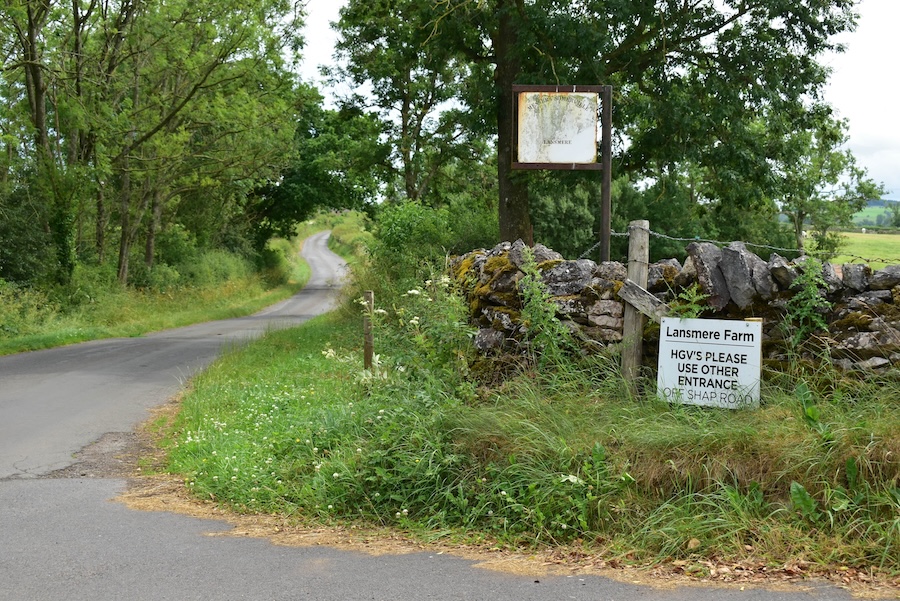
After a spell of road walking we turned right at this point and headed towards Lansmere farm as we wanted to try and find the Quaker Burial Ground which we understood to be somewhere on the left of the farm access lane near to a bend in the road.
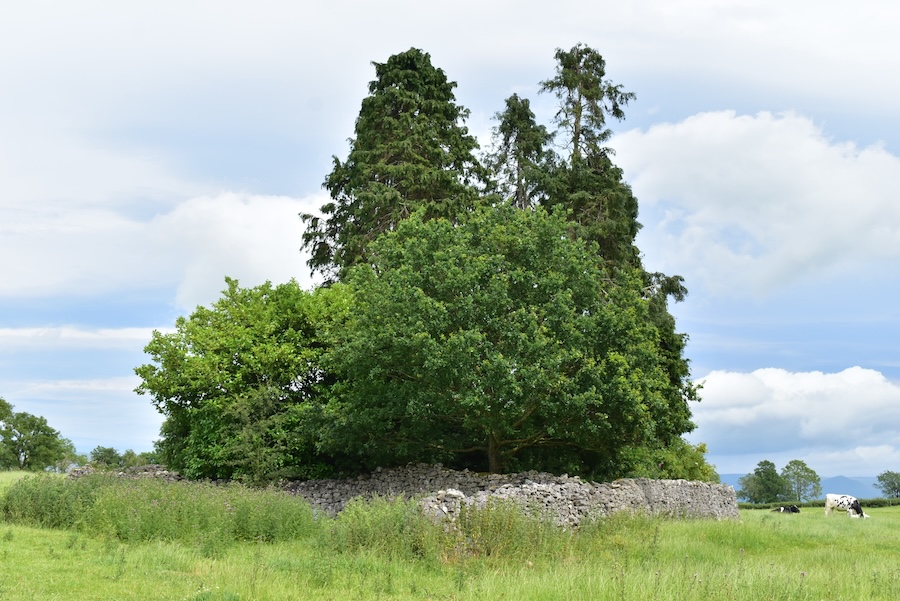
A look at our route map shows a definite squiggle close by the bend in the road we’d been walking. The squiggle was the result of several attempts to locate the burial ground and the above shot shows what it looked like when we found it. The burial ground has a wall all the way around it and in which several trees have made their home. We walked around the wall to the left of the shot where we found an entrance in the form of a stile.

Peering down from the stile revealed nothing but completely overgrown vegetation so, on the basis that no-one would build a wall in the middle of a field which contained nothing, we thought there must be something of note within the mass of vegetation. I hacked away, with a wooden branch that J had found, at the nettles and the other plant life all vying for space within the walled enclosure, which eventually revealed the above sign. We had located the old Quaker burial ground but we had to be satisfied with that as further exploration was impossible because the whole area was so thickly and impenetrably overgrown. Further research revealed that this is a Grade ll listed site and we learned that four memorial slabs have been re-set into the south and west walls, and carry dates in the late 17th and early 18th centuries. Pity we didn’t know that at the time or we would have looked for and photographed the memorial slabs. We’ll have to return and take some shots so I can insert them at a later date.

We returned to the lane we had left and continued on to Newby. Passing Mountain View cottage we were intrigued by this white chain arrangement perched on the roadside banking outside the cottage’s walls. It had obviously had its chain links welded together for it wouldn’t stay upright otherwise, but what on earth was it for? Perhaps it is/was nothing more than a piece of whimsy to puzzle passers-by.

A signpost indicating the way to some of the nearby villages. We went down the track towards the house with the white notice in front of it but it turned out to be nothing more than a collection of residences so I didn’t take any photos while we were down there.

Back on the road through Newby village on over on our right was Newby Hall, a manor house dating from 1685 and a grade 2 listed building.

A close up view of Newby Hall’s front entrance. The Hall was historically associated with the Nevinson family and the coat of arms tablet above the door contains the initials IN and EN and the date of 1685. The last recorded sale took place in 1999 and the buyer’s name is not publicly listed.
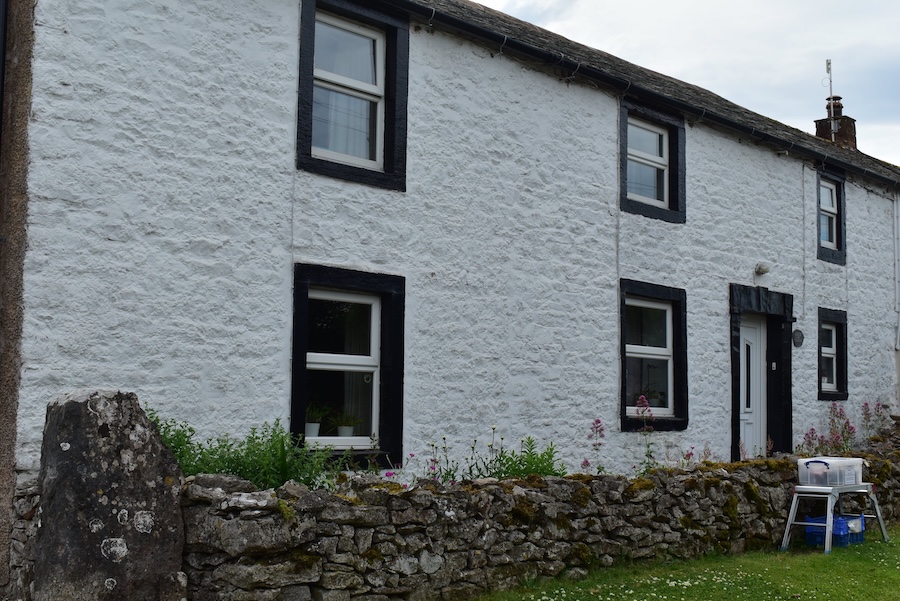
A refurbished cottage, but still in keeping with its surroundings, in Newby village, with an egg stall and honesty box outside by the front wall. We saw a couple of such egg selling/honesty box tables as we walked through the village.
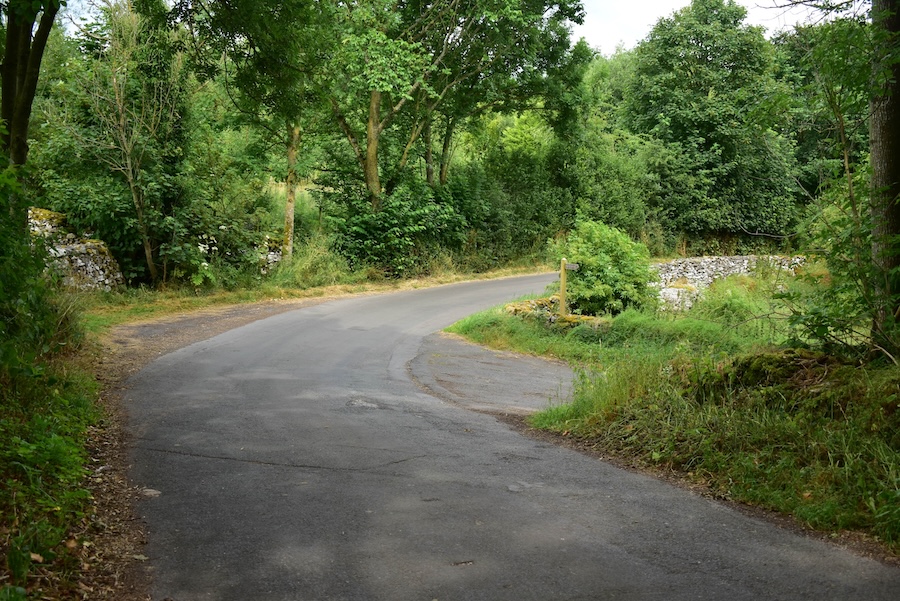
Leaving Newby village and walking to Newby End via the quiet lane. Where the wall is, on the left, we spotted …..
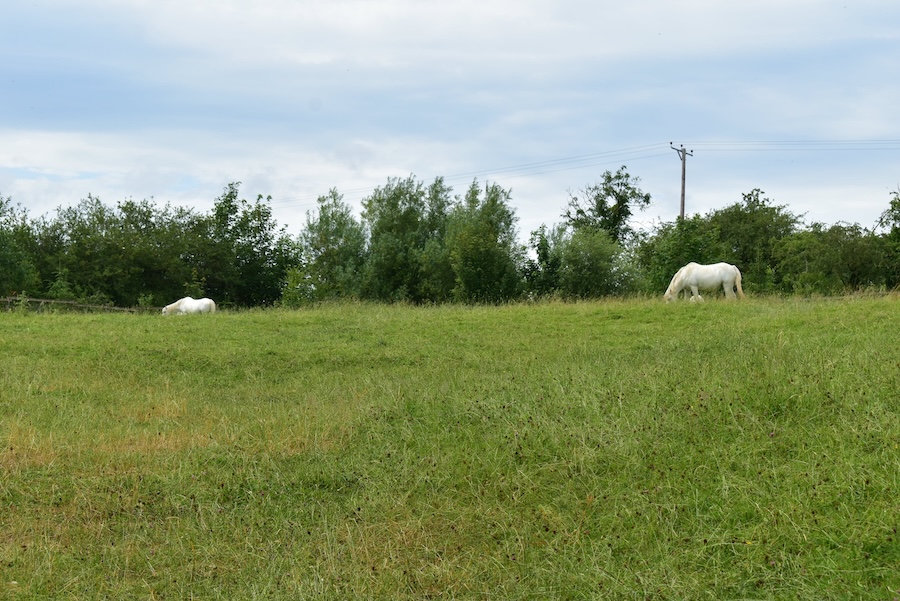
….. a group of four white ponies although only two were visible from the gate. We did try to get them to come across and accept a couple of handfuls of long grass but after an indifferent look towards us the pony on the right returned to grazing what was in front of it, the one on the left didn’t notice us at all.
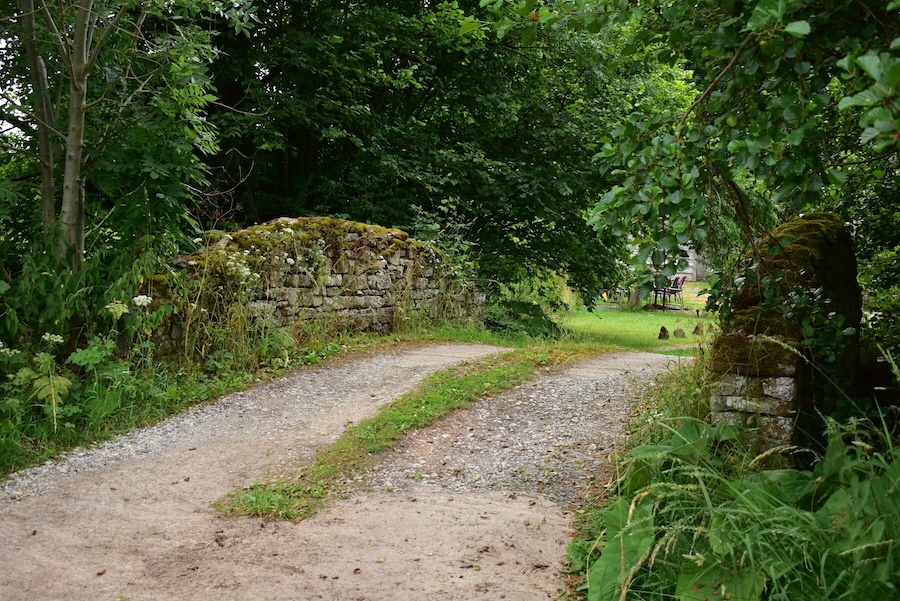
Nearing Newby End at this point with a quick look along the bridge crossing over Morland beck leading to a house named Cracow.
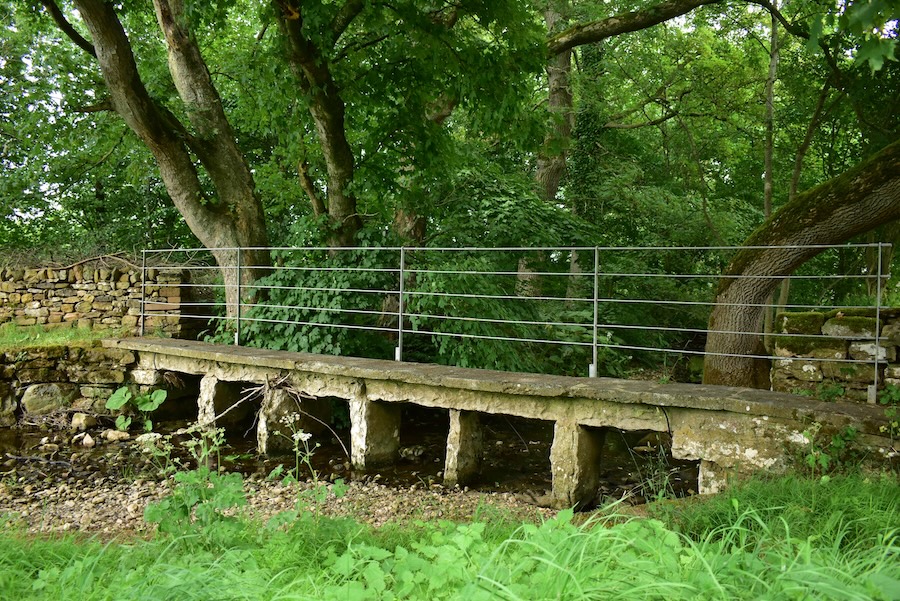
We also had to cross Morland beck as we walked towards Newby End. The road bridge only had wooden railings on either side but this old pedestrian bridge, made with and supported by, rock slabs was worthy of a shot. Wonder how many pedestrians slid into the beck before the fence was put in?
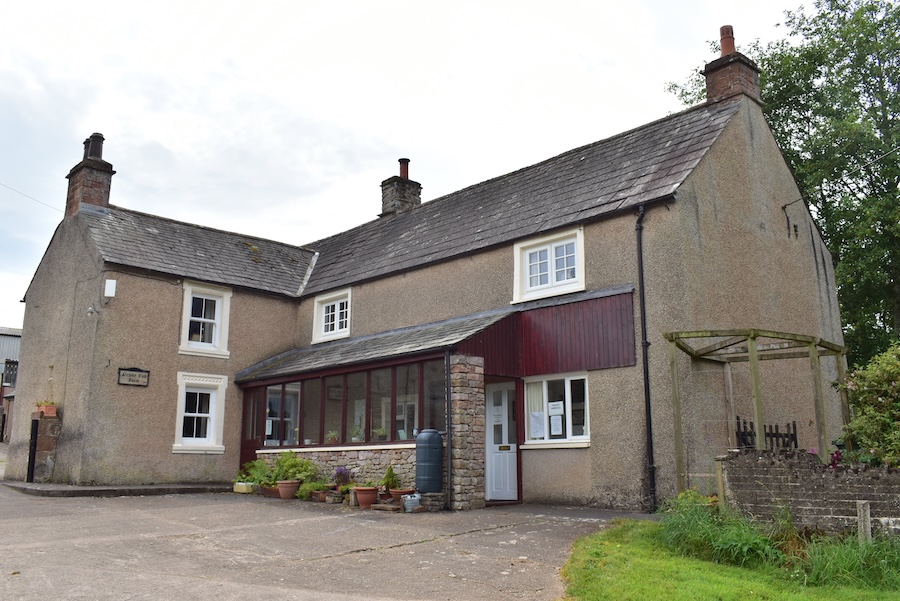
Newby End House where we left the road, which goes on to King’s Meaburn, and took to the track which would lead back to Morland. There is a campsite here and the house in the shot is where the campsite is operated from.
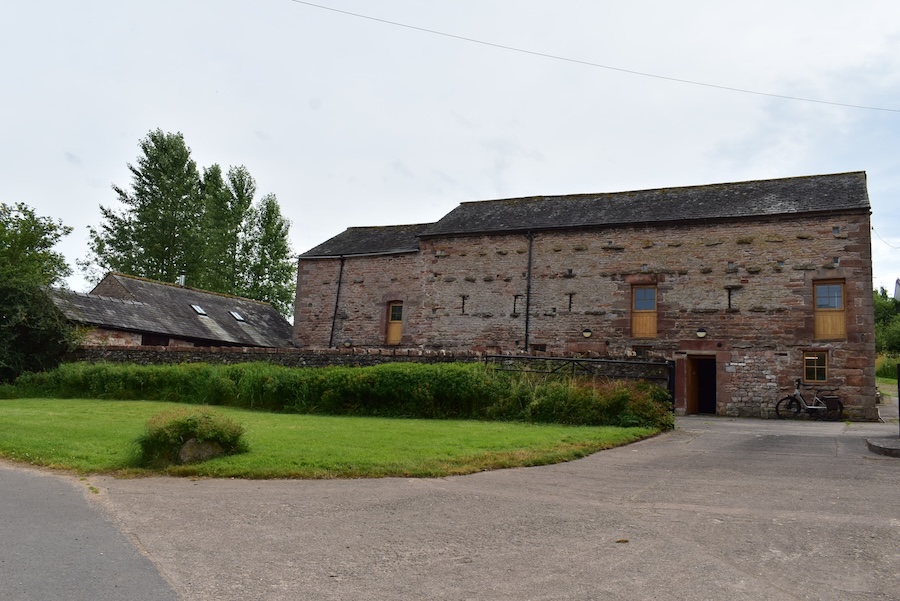
Just beside the house it looks like some former barns/sheds have taken on a new lease of life as holiday accommodation in the form of a bunk barn. Lights were on, bikes leaning against the walls, all the usual signs that tell you someone is in residence there.
 We turned off the road and walked through the ‘silent as a grave’ campsite where no-one was in evidence. although there were several caravans with external awnings already attached so a few folk must be camped there. It looked a good spot for a campsite, plenty of space, hard standing for vehicles, and electricity points in every bay. A little further on we noticed that each bay was separated from the next by some well kept shrubbery.

The walk through the campsite didn’t take long and at the end of it was this gate and where ‘the invasion of the monster plants’ began.

There is a path through, believe it or not, but the Gunnera and its big leaves had taken over. J leads the way ……

….. and was just ahead of me at this point although we can’t see each other for the cow parsley and the gunnera.

Gunnera beside Morland beck, a location it thrives in. Its a moisture loving bog plant which is often to be found beside lakes, ponds and streams. It is very invasive so don’t plant it in your garden.

The wooden stile returns! This one had a red rope attached to one of the uprights which, when pulled, raised a wooden slab which allowed dogs to pass through. It would have to be quite a small dog though as there wasn’t a large amount of space.

Out in the open again and walking beside Morland beck which led us down to …..

….. the very last stile of the walk and not a rickety wooden one either, but a sturdily built and a ‘been there for ages’ stone one set into a wall on the outskirts of Morland village.

Just as we entered Morland village the sun came out and bits of blue sky began appearing. This old gas lamp stirred a few memories although whichever way I tried to photograph it there was always …..

….. a car parked somewhere along Water Street. For those of you who are not familiar with gas street lighting this used to be the way every street in England used to be lit. I don’t remember exactly when they were phased out, probably sometime during the late sixties/early seventies, but to the pair of us they are a very familiar sight. We had a few in my childhood village in Yorkshire and I remember the ‘lamplighter’ doing his rounds. In the evening he would light the village gas lamps and in the morning he would go round putting them out again. He would use a long pole for both and sometimes you would see him up a ladder doing something to the inside of the lamp, changing the mantle or doing a small repair. My grandmother (mother’s mother) still lived in a house lit by gas lamps in the 1950’s and if more light was needed the gas tap would be turned up, if you didn’t it would be turned down or completely off. Changing a mantle was a whole new world as they had to be handled very carefully because they broke quite easily.

Strolling along Water Street in Morland with the pedestrian bridge across Morland beck. The ford for wheeled vehicles is just in front of it.

Rose Cottage. One of Morland’s original cottages and quite charming to look at. It has been re-pointed, with door and new windows installed but still retains its character. The stone slabs forming the door way and each of the windows are part of the Cumbrian housebuilding tradition.

As we reached the Crown Inn at the end of Water Street we noticed that building work was taking place so we called in and had a word with one of the builders. It has been bought outright, so it isn’t tied to a brewery, by someone who lives in the Eden Valley and it is hoped that it will be open for food and drink by Christmas. The builder told us that he was doubtful that the original opening date of August would be achieved but that the owner hoped to have the pub open during this current year. We were given a tour of the work done so far and so, in view of being shown around and all that he told us, it is fitting that the final photo of today’s walk is of the Crown Inn, Morland.